
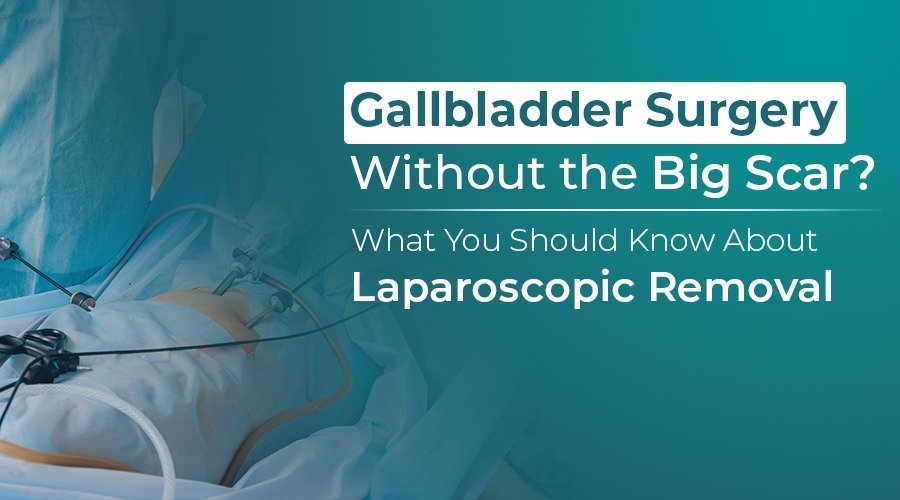
Gallbladder Surgery Without the Big Scar? What You Should Know About Laparoscopic Removal
Many patients who come in with gallbladder pain still carry an old picture in their head. A long cut on the stomach. Weeks of pain. A scar that never really goes away. That picture isn’t wrong. It’s just outdated.
Surgery has changed quietly over the years. Gallbladder removal is one of the clearest examples. For most people today, the surgery looks nothing like what they imagine when they hear the word “operation”.

"Modern gallbladder surgery means smaller scars, less pain, and faster recovery."
Why Gallbladder Problems Usually Don’t Settle on Their Own
The gallbladder is small, and problems often start small too. A bit of pain after eating. Discomfort on the right side. Occasional nausea. Many people adjust to this and carry on, assuming it will pass.
The trouble is gallstones rarely disappear once they start causing symptoms. They tend to repeat. Sometimes the pain becomes sharper. Sometimes it comes at inconvenient times. Sometimes infection or inflammation develops. At that stage, removing the gallbladder is not about urgency. It’s about preventing the same problem from coming back again and again.
What Laparoscopic Surgery Actually Means
Laparoscopic gallbladder surgery avoids a single large cut. Instead, a few small openings are made. A camera goes in through one opening. Instruments go in through the others. The surgeon works by looking at a screen that shows the area clearly.
Because the muscles are not cut widely, the body doesn’t react as strongly as it does with open surgery. That difference shows up later as less pain, easier movement, and smaller scars. Most patients are surprised by how small the marks are once healing begins.
What Patients Usually Notice After Surgery
Recovery is often the part people worry about the most. After laparoscopic surgery, many patients are able to sit up and walk on the same day. Pain is usually manageable. Hospital stays are short, often one day.
Over the next few days, movement improves steadily. Light activities feel possible sooner than expected. Full recovery still takes time, but it rarely feels as overwhelming as people fear before surgery. The NHS notes that laparoscopic gallbladder removal generally allows a quicker return to normal activity compared to open surgery.
Eating After Gallbladder Removal
This is one of the most common questions. After surgery, bile flows directly from the liver into the intestine. Most bodies adapt without much trouble. Some people notice temporary changes, especially after heavy or oily meals.
These changes usually settle as the digestive system adjusts. Doctors often suggest simple food choices during early recovery, not long term restrictions. Most patients return to their usual diet with time.
How Laparoscopic Surgery Changes the Conversation
When surgery is needed, laparoscopic techniques often make the process less daunting. Smaller incisions. Reduced strain on the body. Faster recovery for many patients. These benefits matter, especially for people who want to return to work and daily life without prolonged disruption.
Not every case that walks in is suitable for laparoscopy, but when it is, it allows treatment to be planned smoothly instead of being feared of the same.
When Open Surgery Is Still the Better Option
Laparoscopic surgery is not a rule. It’s a preference when conditions allow. Severe infection, extensive scarring, or unusual anatomy can make open surgery safer. Sometimes this decision is made before surgery. Sometimes it becomes clear during the procedure.
What matters is not the size of the scar. It’s the safety of the patient. The approach is chosen based on what gives the best control and outcome.
How Surgery Is Planned at Dr. Varun’s Centre
At Dr. Varun’s Gastro and Laparoscopy Centre, surgery is not suggested at random. Each patient is assessed very carefully. Laparoscopic gallbladder removal is recommended only when it offers clear benefits such as smoother recovery and less discomfort at any cost. Patients are informed about why a particular approach is suggested and what recovery is likely to involve. The aim is clarity, not persuasion.
Closing Thought
Gallbladder surgery today is very different from what many people expect. For most patients, it does not involve a large scar or a long period of immobility. Understanding how laparoscopic removal works often reduces fear more than reassurance ever can. Clear information allows patients to focus on recovery instead of worrying about the surgery itself.